
Why Is The 26th Called Boxing Day
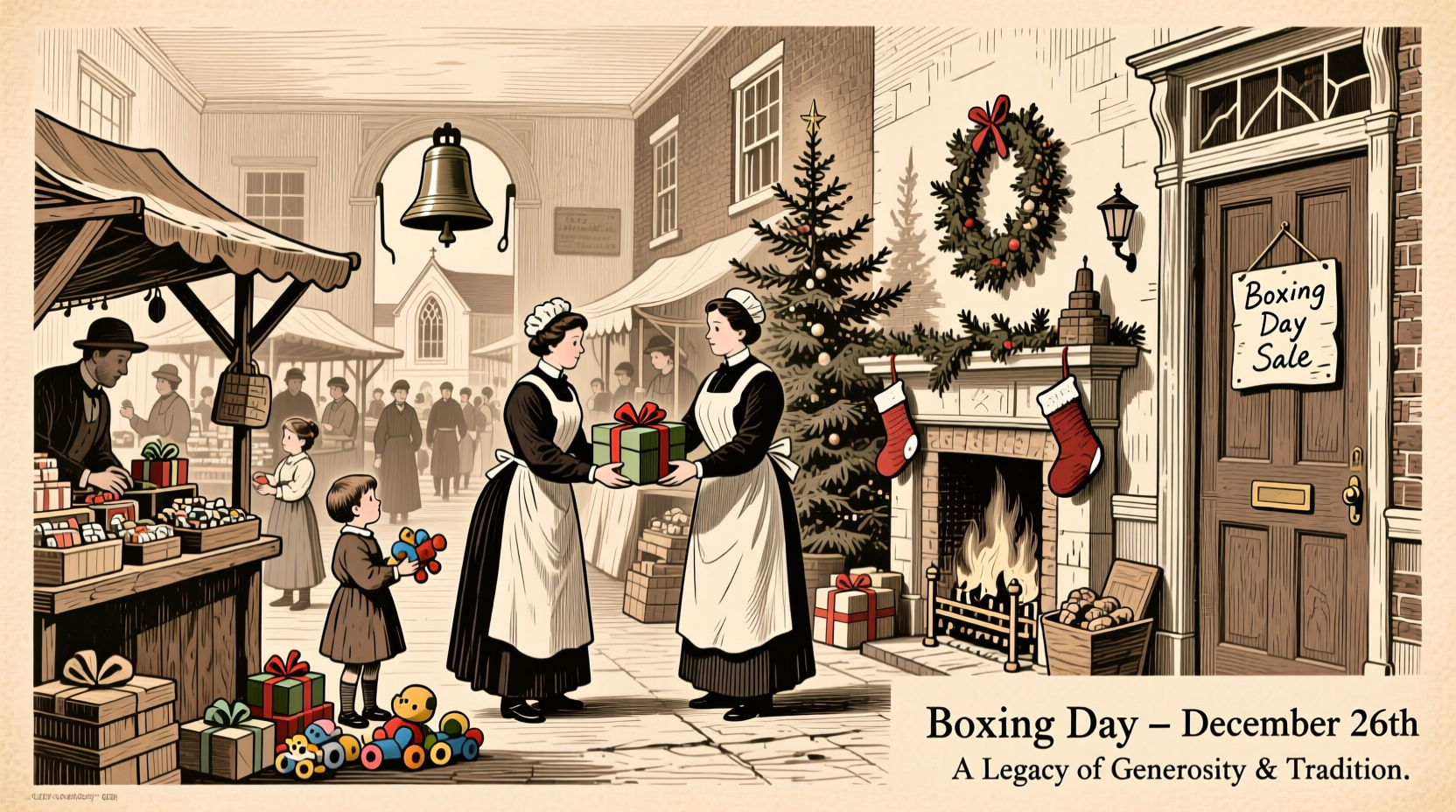
So, Why the Heck is it Called Boxing Day?
Alright, gather 'round, folks. I've got a tale to tell, a mystery to unravel, a conundrum that's been puzzling the masses for centuries. Why, you ask, is the day after Christmas known as Boxing Day? Now, don't go thinking I'm about to bore you with some stuffy, historical lecture. No, no, no. I'm here to entertain, to enlighten, and perhaps, just perhaps, to settle a few bets at the local pub.
First things first, let's get one thing straight. No, Boxing Day has nothing to do with the sweet science of pugilism. I mean, sure, after a day of turkey and tryptophan, some of us might feel like we've gone a few rounds with Rocky Balboa, but that's not what we're talking about here.
Alms Boxes, Not Gloves
Now, let's rewind back to the Middle Ages. Picture this: it's Christmas Day, and the local church is packed. The priest is mid-sermon, when suddenly, he stops, turns to the congregation, and says, "Alright, everyone, time to empty your pockets." No, he wasn't asking for a group selfie with the parishioners' latest iPhones. He was talking about alms boxes.
Must Read
You see, it was customary for wealthy worshippers to place money in these boxes for the poor. The church would then distribute these funds on the day after Christmas, which, conveniently enough, was known as St. Stephen's Day. But here's where it gets interesting. In some places, the priests would take these boxes on a 'collection round' to the houses of the wealthy. And here's where our tale takes a turn towards the dramatic.
Boxing Day: The Original Door-to-Door Fundraiser
Imagine the scene: a priest, armed with an alms box, knocking on the door of a grand manor. The butler answers, and the priest says, "Good day, kind sir. We're collecting for the poor. May we have a donation, please?" Now, if the butler was feeling particularly generous, he might take the box, fill it with coins, and hand it back with a flourish. But here's where the fun begins. If the butler was feeling a bit... shall we say, cheap, he might hand back the box empty.

And so, the tradition of 'boxing' - or, more accurately, 'emptying' - the alms boxes was born. Over time, the term 'boxing' stuck, and the day after Christmas became known as Boxing Day. It's like the world's longest-running, most elaborate door-to-door fundraiser. I mean, who needs bell-ringers when you've got a priest with an alms box?
But Wait, There's More!
Now, you might be thinking, "That's all well and good, but what about the rest of the world? Surely, they can't all be celebrating an ancient church fundraiser?" Well, you'd be right. While the UK and Canada stick with the traditional 'alms boxes' story, other countries have their own interpretations.

In Australia, for instance, Boxing Day is all about cricket and beach parties. I mean, who needs snow when you can have sunburn and sand? Meanwhile, in South Africa, it's a public holiday dedicated to... wait for it... shopping. Yes, you heard it right. After a day of feasting, they head straight to the mall. I guess that's one way to work off the Christmas pudding.
And the Moral of the Story?
So, there you have it. The mystery of Boxing Day, solved. And the moral of the story? Well, it's probably something like, "Always check your pockets before church, just in case." Or maybe, "Never underestimate the power of a good story to explain a strange tradition." Either way, I hope you've enjoyed this little jaunt through history. Now, who's ready for a pint?