
What Is Hra In Health Insurance

So, there I was, scrolling through my inbox, when I stumbled upon an email from my health insurance provider. Now, I'm not one to shy away from a good mystery, but insurance jargon? That's a whole different ball game. One term, in particular, caught my eye - HRA. I mean, it sounded like something you'd find in a video game, not an insurance policy. But hey, I was curious, so I decided to dive in and find out what this HRA business was all about. And guess what? It turns out it's not as complicated as it sounds. Let me spill the beans.
First Things First: What's an HRA?
Alright, let's start with the basics. HRA stands for Health Reimbursement Arrangement. It's a tax-advantaged account that's usually funded by your employer to help you pay for out-of-pocket medical expenses. Think of it as a little pot of gold at the end of the healthcare rainbow. But here's the thing, it's not the same as an FSA or an HSA. No, no, no. Those are different beasts altogether. But more on that later.
How Does an HRA Work?
Okay, so here's the deal. Your employer sets up the HRA and decides how much money to put into it each year. This money is then used to reimburse you for qualified medical expenses. Now, here's where it gets interesting. Unlike FSAs and HSAs, HRAs are owned by the employer, not you. This means that if you leave your job, you won't take the HRA with you. But don't worry, you can still use the money in the HRA for eligible expenses even after you've left.
Must Read
And get this, HRAs can be used in conjunction with individual health insurance policies. That's right, you don't have to have employer-sponsored insurance to use an HRA. Isn't that something?
Now, About Those Other Accounts...
I know, I know, I said I'd explain the difference between HRAs and other accounts. So, let's dive in, shall we?

Flexible Spending Accounts (FSAs)
FSAs are similar to HRAs in that they're used to pay for out-of-pocket medical expenses. But here's where they differ: FSAs are owned by the employee, not the employer. This means that if you leave your job, you can take your FSA with you. Sort of. There are rules about how much money can be rolled over from year to year, but that's a story for another time.
Health Savings Accounts (HSAs)
HSAs are a bit different from HRAs and FSAs. They're like a savings account for healthcare expenses. You can use the money in an HSA to pay for current medical expenses, or you can let it grow and use it later. The best part? The money in an HSA grows tax-free, and you can even invest it. But here's the catch: to have an HSA, you need to be enrolled in a high-deductible health plan.
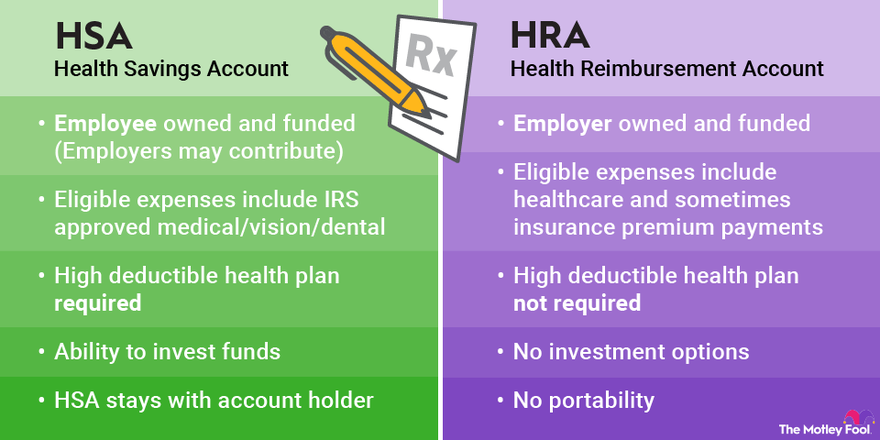
So, Which One is Right for You?
Well, that depends on your situation. If your employer offers an HRA and you have eligible medical expenses, it might be worth looking into. But if you prefer to have more control over your healthcare savings, an FSA or an HSA might be a better fit. The important thing is to do your research and understand the rules before you make a decision.
And there you have it, folks. The mystery of the HRA unraveled. I hope this little journey into the world of health insurance has been as enlightening for you as it was for me. Who knows, maybe next time you see that term in your inbox, you'll smile instead of scratching your head. Happy exploring!